Mostar
Mostar is the most famous city on the Neretva River in Bosnia and Herzegovina and the cultural heart of Herzegovina. The city developed around the river crossing, where trade routes once connected the Adriatic coast with the interior of the Balkans.
The Neretva divides Mostar into two parts, flowing through a deep limestone valley with its characteristic emerald green color. The river is not only a geographical feature but the central element of the city’s identity, history and daily life.
The Old Bridge – Stari Most
The symbol of Mostar is the Stari Most, the Old Bridge built in the 16th century during the Ottoman period. Designed by the architect Mimar Hayruddin, the bridge elegantly arches over the Neretva, connecting the two sides of the city.
The bridge was destroyed during the war in the 1990s and carefully reconstructed in 2004 using traditional techniques and original stone. Today it stands as a powerful symbol of restoration and coexistence.
During summer months, visitors can witness the traditional bridge divers jumping from the top of Stari Most into the cold Neretva below, a practice that has become a unique part of Mostar’s identity.
The Old Town and Stone Streets
Around the bridge spreads the historic old town with narrow stone streets, traditional houses, small craft shops and cafes. Walking through this area feels like stepping into another time, where Ottoman, Mediterranean and Balkan influences meet.
The old bazaar, known as Kujundžiluk, follows the line of the river and offers views toward the bridge and the canyon of the Neretva.
The Neretva Canyon in Mostar
In Mostar, the Neretva flows fast and deep between high rock walls. Its intense green-blue color contrasts with the white stone architecture of the city. Several viewpoints along the riverbanks offer unforgettable panoramas of the bridge and the canyon.
Cultural Crossroads
Mostar has always been a meeting point of cultures, religions and trade routes. This diversity is visible in its architecture, traditions and everyday life, making the city one of the most interesting places along the entire course of the Neretva.
Quick Facts
- Country: Bosnia and Herzegovina
- River: Neretva
- Famous for: Stari Most (Old Bridge)
- Region: Herzegovina
- Known for: bridge divers, old bazaar, stone streets
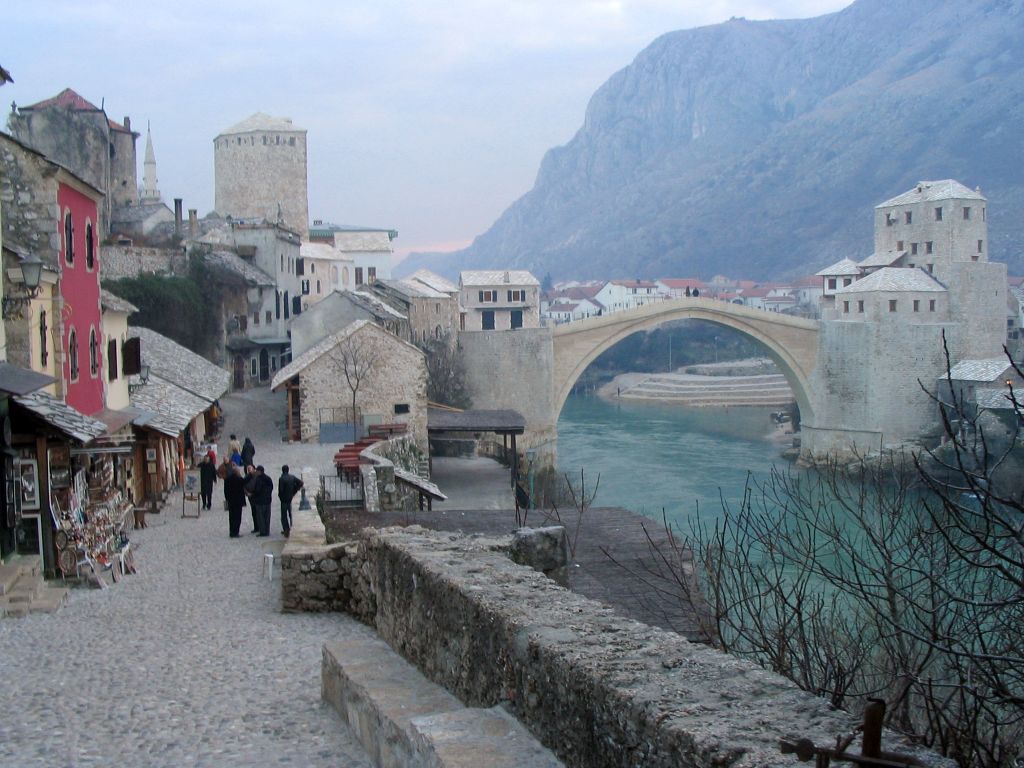
photo: Radenko Kosić