Počitelj
Počitelj is one of the most remarkable historical sites along the Neretva River — a fortified medieval town built into a steep karst cliff on the left bank, about 30 kilometres south of Mostar and 3 kilometres from Čapljina. Looking at it from across the river, with its pale limestone towers rising from the rock, it feels almost unreal — a place that seems to have grown from the mountain itself rather than been built upon it.
Origins — a Bosnian, not Ottoman, foundation
Many visitors assume Počitelj is an Ottoman creation, misled by its mosques, hammam, and medresa. In fact, it was founded in 1383 by King Stjepan Tvrtko I Kotromanić, the most powerful ruler of medieval Bosnia, who built the original fortress to control the trade route running through the Neretva valley from the Adriatic coast toward the Bosnian interior. Tvrtko was at the peak of his reign — he had just crowned himself King of Bosnia and Serbia in 1377 and was actively expanding the kingdom toward the Dalmatian coast. Počitelj was a key strategic and administrative centre for the Dubrava region and guarded the approaches to Drijeva, the important medieval market town nearby.
After Tvrtko's death, the fortress passed through Hungarian hands (1463–1471), when it served as a defensive garrison against Ottoman advances. In 1471, after a brief siege, the Ottomans took the town and held it for over four centuries. It was during the Ottoman period, primarily the 16th and 17th centuries, that Počitelj gained most of its visible architecture: the Šišman Ibrahim-paša Mosque (1563), the medresa, the hammam, the clock tower (sahat-kula), and the residential complexes. The Austro-Hungarian occupation in 1878 ended its strategic role and the town began a long, quiet decline — which, paradoxically, preserved its historic fabric largely intact.
War damage and protection
During the 1992–1995 war in Bosnia and Herzegovina, Počitelj suffered severe damage. The mosque was partially destroyed by explosives in 1993. In 1996, Počitelj was included on the World Monuments Watch list of the 100 most endangered cultural heritage sites in the world. Since 2000, the Government of the Federation of Bosnia and Herzegovina has been running a programme of permanent protection and rehabilitation, which has restored the mosque, the medresa, and the Gavrankapetanović residential complex. The site is proposed for inscription on the UNESCO World Heritage List and currently sits on the Tentative List.
What to see
The Gavran-kapetanova kula — the main citadel tower — rises 45 metres above the river and offers sweeping views of the Neretva valley and the village below. It is worth the climb. The Šišman Ibrahim-paša Mosque is considered one of the finest examples of classical Ottoman religious architecture in Herzegovina, with a high octagonal stone minaret and an elaborately carved entrance portal. Next to the minaret stands an old cypress tree, said to have been brought from Lebanon in the 15th century. The medresa (Muslim school), the hammam (bathhouse), and the sahat-kula (clock tower) complete the Ottoman ensemble. The old bazaar, the čaršija, runs along the riverbank below.
On the hillsides around the village, pomegranate trees, figs, lemons, and grapes grow in abundance — their colours particularly vivid in late summer and autumn.
International Art Colony
Počitelj has been home to one of the most important artistic traditions in the former Yugoslav space. Your instinct was right — there was indeed an artist colony here, and it still exists. Since 1961, the Gavrankapetanović house served as the residence of an international artists' colony, which became the longest operating art colony in Southeast Europe. The colony was organised by the Association of Visual Artists of Bosnia and Herzegovina (ULUBiH) and in its peak years attracted painters and sculptors from across Europe and beyond. By 2013 it had reached its 49th edition, gathering artists from Bosnia and Herzegovina, Croatia, Slovenia, Serbia, Greece, Denmark, Spain, Germany, South Korea and others. Works created during the colonies are collected into the Art Collection Počitelj and have been exhibited in galleries in Sarajevo and elsewhere.
The Gavrankapetanović house was burned during the war but restored in 2003, and the colony has continued since. If you visited for an exhibition, you were almost certainly part of this tradition — one of thousands of artists and visitors who have been drawn to this extraordinary setting over the decades.
Getting there
Počitelj is located on the main road M-17 between Mostar and Metković, easily accessible by car. There is a small car park at the foot of the town. The climb through the stone streets to the tower takes about 20–30 minutes and involves uneven steps — comfortable shoes are recommended. In summer, local residents sell fruit, handmade textiles and artwork at the entrance to the bazaar.
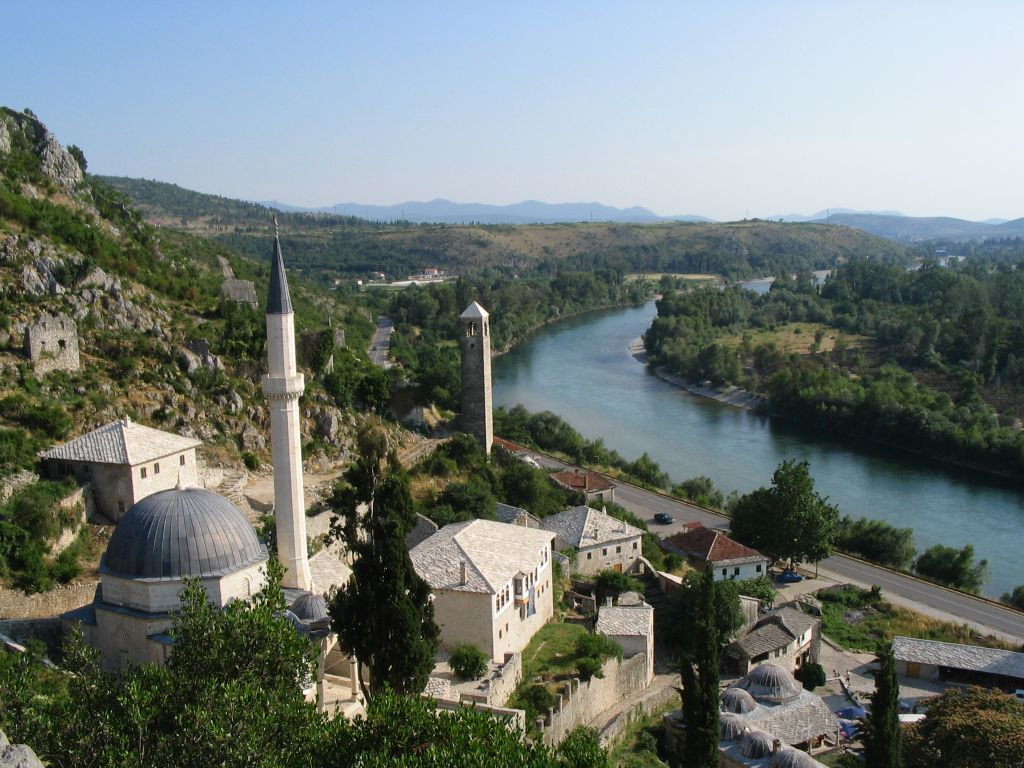
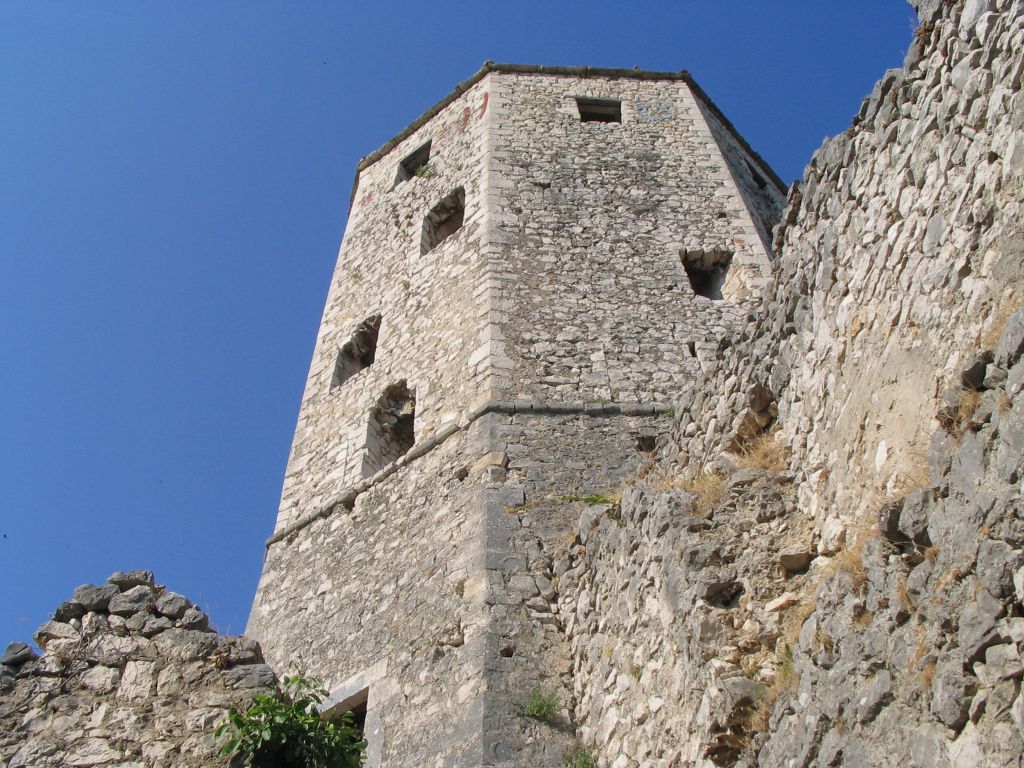
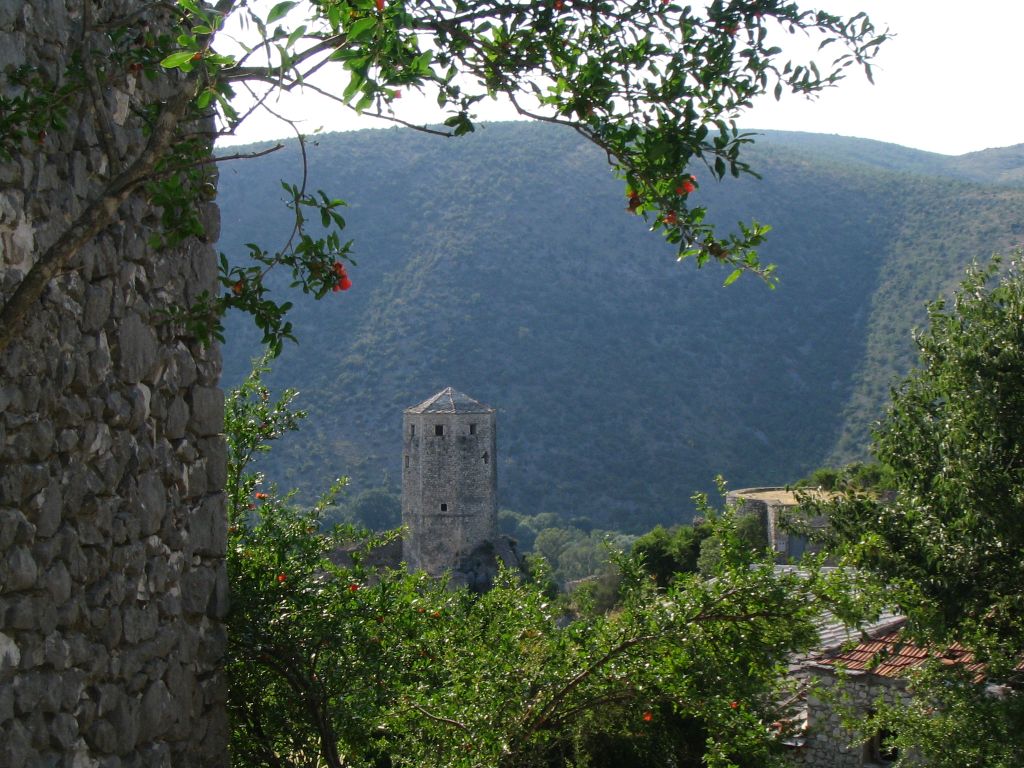
photo: Radenko Kosić